
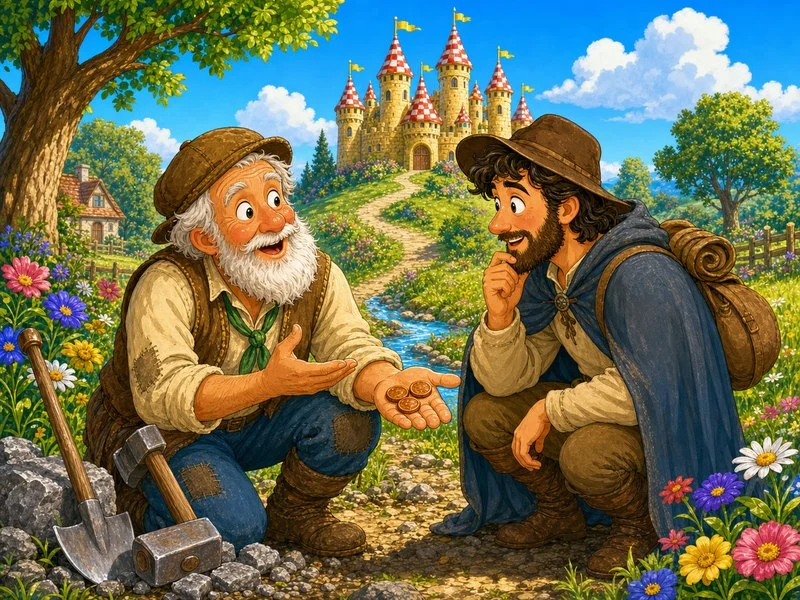


In a kingdom long ago there lived a king who liked, every now and then, to wander his roads dressed as a plain traveller, so that he might hear what his people truly thought of him. One bright morning, walking along a dusty road in a worn grey cloak, he came upon an old man kneeling in the ditch, splitting stones to mend the king’s highway.
The work was hard and the old man’s hands were cracked like old leather, yet he hummed to himself as cheerfully as a boy.
“Good morning, grandfather,” said the king. “Tell me, what do they pay you for breaking stones all day long in the heat?”
“Three pennies, friend,” said the old man, wiping his brow. “Three pennies a day, no more and no less.”
“Three pennies!” The traveller shook his head. “And how does a man keep body and soul together on so little?”
The old man laughed. “Keeping body and soul together is the easy part. The hard part is this: of my three pennies, the first I pay back, the second I lend, and only the third is truly my own.”
The king frowned and rubbed his chin. He walked a few paces in silence, turning the words this way and that, but he could make no sense of them. At last he gave up and said honestly, “I am only a simple traveller, and I do not understand. How can a man pay back, and lend, and still live, all on three small coins?”
“It is no great mystery,” said the old man kindly. “I keep my aged mother under my roof, too frail now to lift a spoon. The first penny I pay back to her, for she fed and raised me when I could do nothing for myself. The second I lend to my young son, trusting that one day, when I am old and bent, he will repay the loan and care for me as I cared for him. And the third penny I keep, and on that I live.”
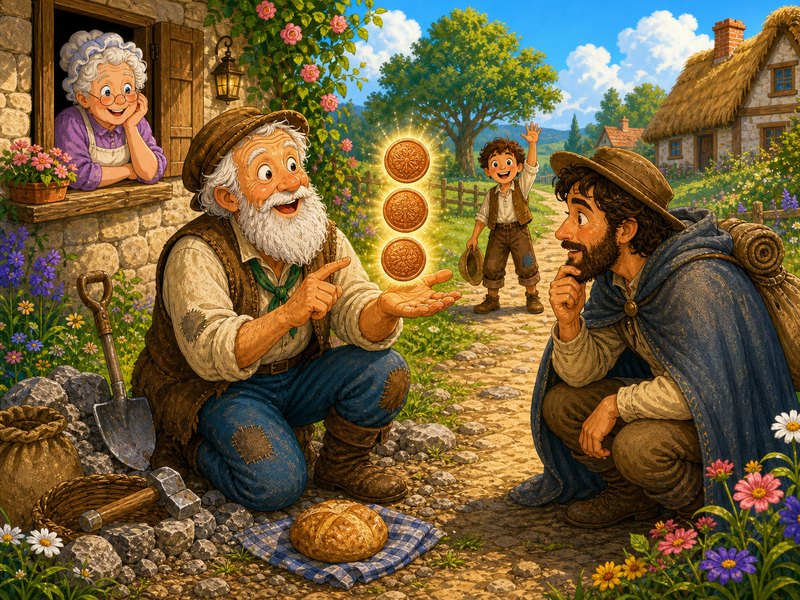
The king’s face lit up like a window at sunrise.
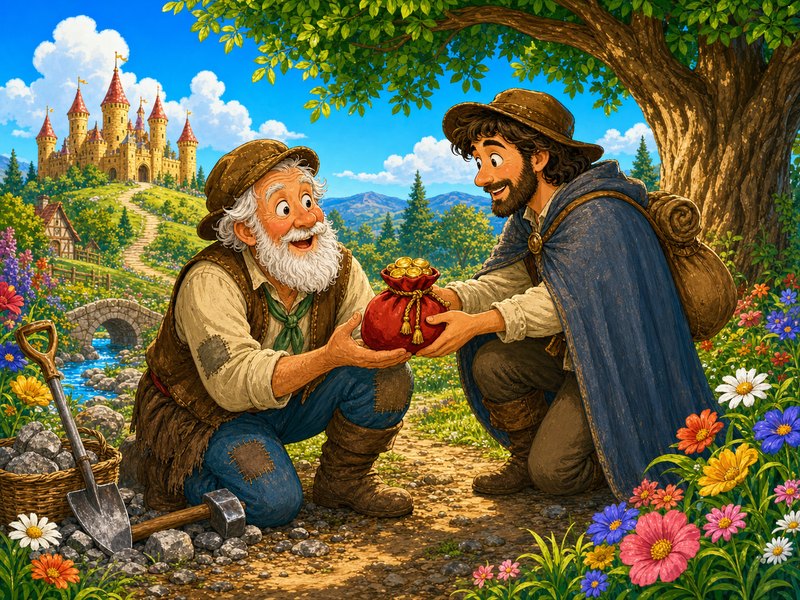
“Old man, you carry more sense in your little finger than many a great lord carries in his whole head.” He pressed a small purse of gold into the man’s hand. “Take this for your honest answer. But do me one favour in return. I mean to set this very riddle to certain clever men I know, and they may come hunting you for the answer. Tell them nothing, not a single word, until the day you look upon the king’s own face.”
And before the old man could ask what he meant, the ragged traveller was gone down the road.
Now that traveller was the king himself, and the moment he reached his castle he summoned his seven counsellors before him. They were proud men in fur-trimmed robes, paid handsomely from the royal treasury, and yet forever grumbling that it was never quite enough.
“My wise counsellors,” said the king, “somewhere in my kingdom there is a man who earns but three pennies a day. Of those three he pays one back, lends another, and lives on the last alone, and still he lives an honest and contented life. Since you are so much wiser than a poor stonebreaker, tell me how this can be. You have until the third sunrise. And if you cannot answer me, I shall send you from my court with empty hands, so that you stop eating my bread for nothing.”
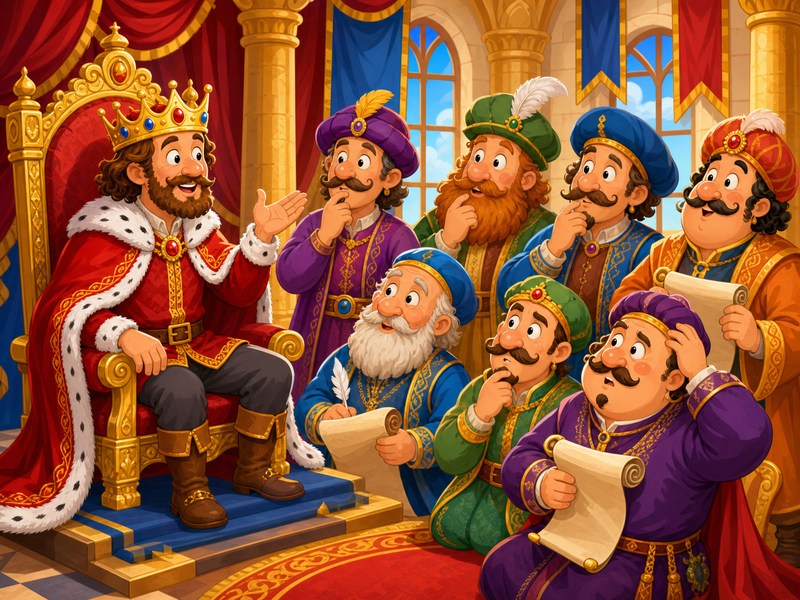
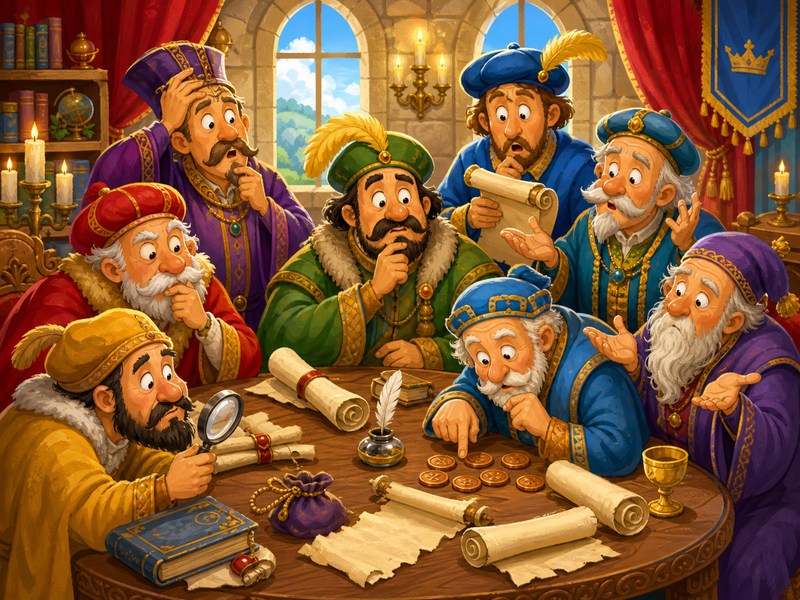
The seven counsellors bowed low and went away with faces as long as winter nights. They shut themselves in a chamber and argued from dawn until dark. Each was certain he was the cleverest of the seven, and yet, all of them together, they could not unravel the riddle of one poor old man. The first day went by. The second slipped after it. And on the morning of the third day, when they were due to stand before the king, they were no nearer the answer than when they had begun.
Then a servant whispered to them that the riddle had come from an old stonebreaker on the eastern road, and that he, if anyone, could untie the knot for them. So the seven counsellors climbed into their fine carriage and went rattling off to find him.
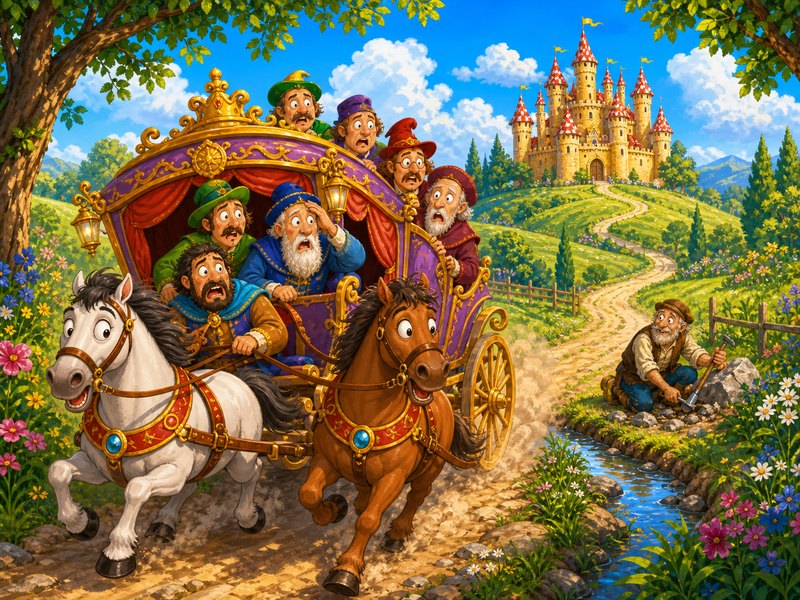
They found the old man in his ditch, calmly splitting stones. They begged. They flattered. They threatened. They tried every trick they knew to wring the answer out of him. But the old man only leaned on his hammer and smiled.
“Gladly would I help you,” he said, “but the king himself ordered me to hold my tongue until the day I look upon his face. Show me the king’s face, and the words will come freely. Until then, grind away all you please; there will be no flour from this grain.”
“And how are we to show you the king’s face?” they wailed. “The king will not come trotting out to a roadside ditch on our say-so, and you cannot march into the throne room to gawk at him! Be reasonable, old man.”
“If even that is beyond seven such clever heads,” said he, “then no bread can be baked here today.”
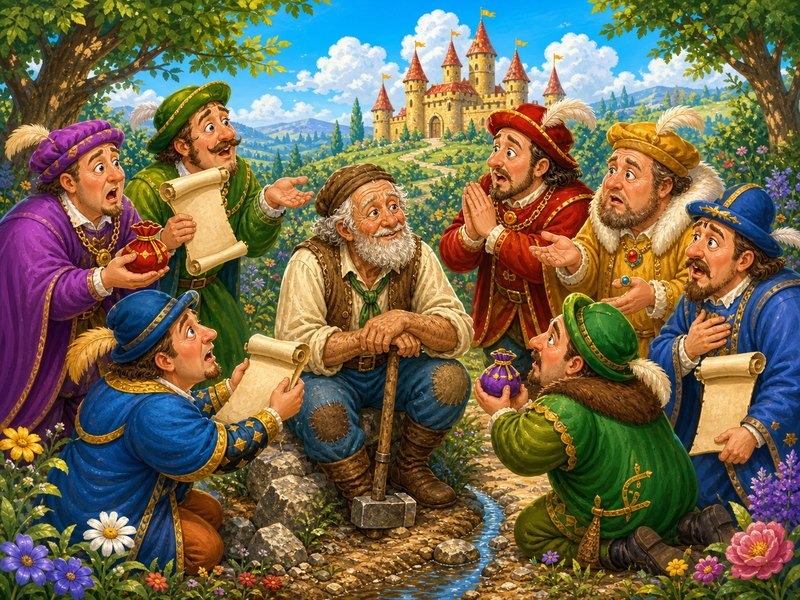
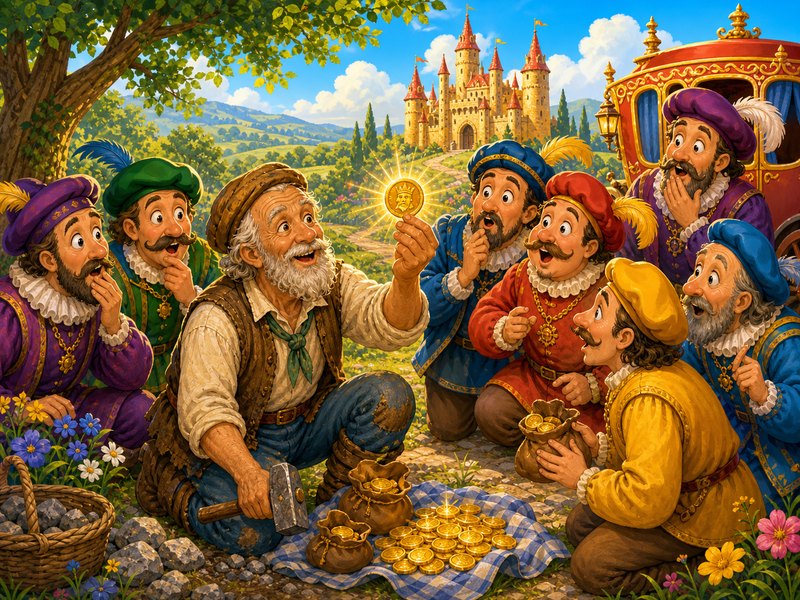
So they reached for their last resort. They emptied their purses before him and promised more besides, swearing that with such a fortune he would never need the king’s favour again. Still the old man said nothing, and let them sweat. Only when the gold lay in a shining heap, and only after he had laughed his fill at seven grand lords who could not help themselves, did he reach into his pocket and draw out a single gold coin.
“Look here,” he said, holding it up to the light. “Stamped upon this coin is the king’s own face. The king placed it in my hand himself, and I am looking upon his face this very moment. So I have broken no command at all, and now I may tell you whatever you wish.”
And so, at long last, he told them the answer to the riddle.
On the third morning the seven counsellors stood before the king and answered him without a stumble, for they had borrowed a poor man’s wits. But the king was no fool, and he caught the scent of it at once. He sent straightaway for the old stonebreaker.
“Tell me, old man,” said the king, and now at last the man saw that his ragged traveller and the king upon the throne were one and the same. “You seemed an honest soul to me. How is it that you have gone against my command?”
“I have broken nothing, Your Majesty,” said the old man, bowing low. “I held my tongue like a stone in a wall, right up to the moment I looked upon your face. And look, I have it still.” He drew out the golden coin with the king’s likeness upon it. “You placed it in my own hand.” Then he told the king the whole story: how the seven had come at him with threats and with pleading, how they had poured out all their gold, and how he had let them empty their purses before he spoke a single word.

The king threw back his head and laughed.
“Old man, you carry more wisdom in that worn-out coat than all seven of these in their fine robes. From this day you shall break no more stones. You shall live in my castle as a lord, and sit at my right hand in council.”
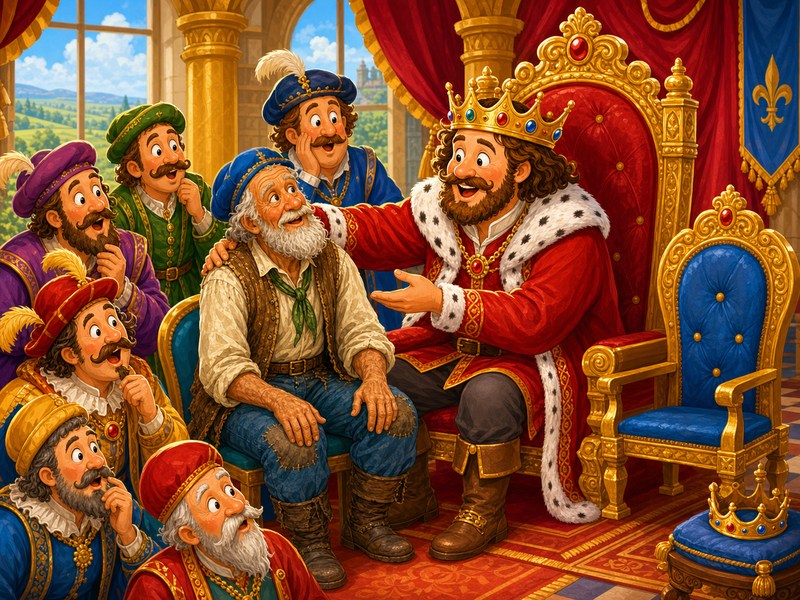
Then he turned to the seven counsellors, and his face grew stern. “As for you. Are you not ashamed? With all your learning you could not solve what a poor man solved with plain common sense. So hear my judgement: not only will I not raise your pay, I shall take away a good share of what you already have.”
And from that day on, the seven counsellors never once came complaining to the king that their wages were too small.
Thank you! I’m so happy you enjoyed it. If you ever have an idea for a new lesson or story theme, feel free to share it in our forum (https://naratopia.com/community/). We’d love to create a story inspired by our readers <3
What an amazing story!! So grateful to be able to share it with my kiddos, thanks!
Thank you so much! ❤️ It means a lot to us that you took the time to write this. Knowing that you’re sharing our stories with your kiddos is exactly why we love creating them. We’re so happy you enjoyed it!
Thank you so much! ❤️ We’re so happy you enjoyed it, and even happier knowing you’re sharing it with your kiddos. That truly means a lot to us! 😊