
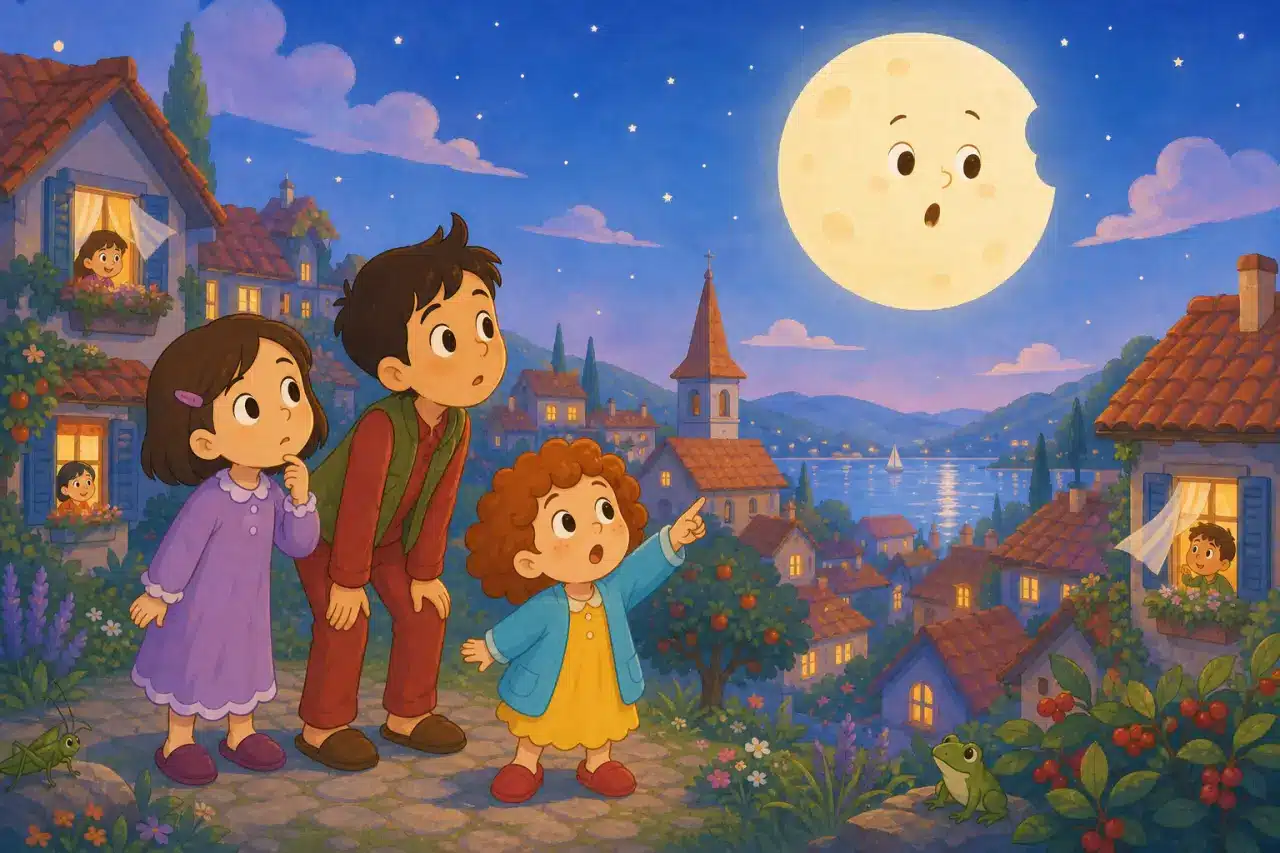

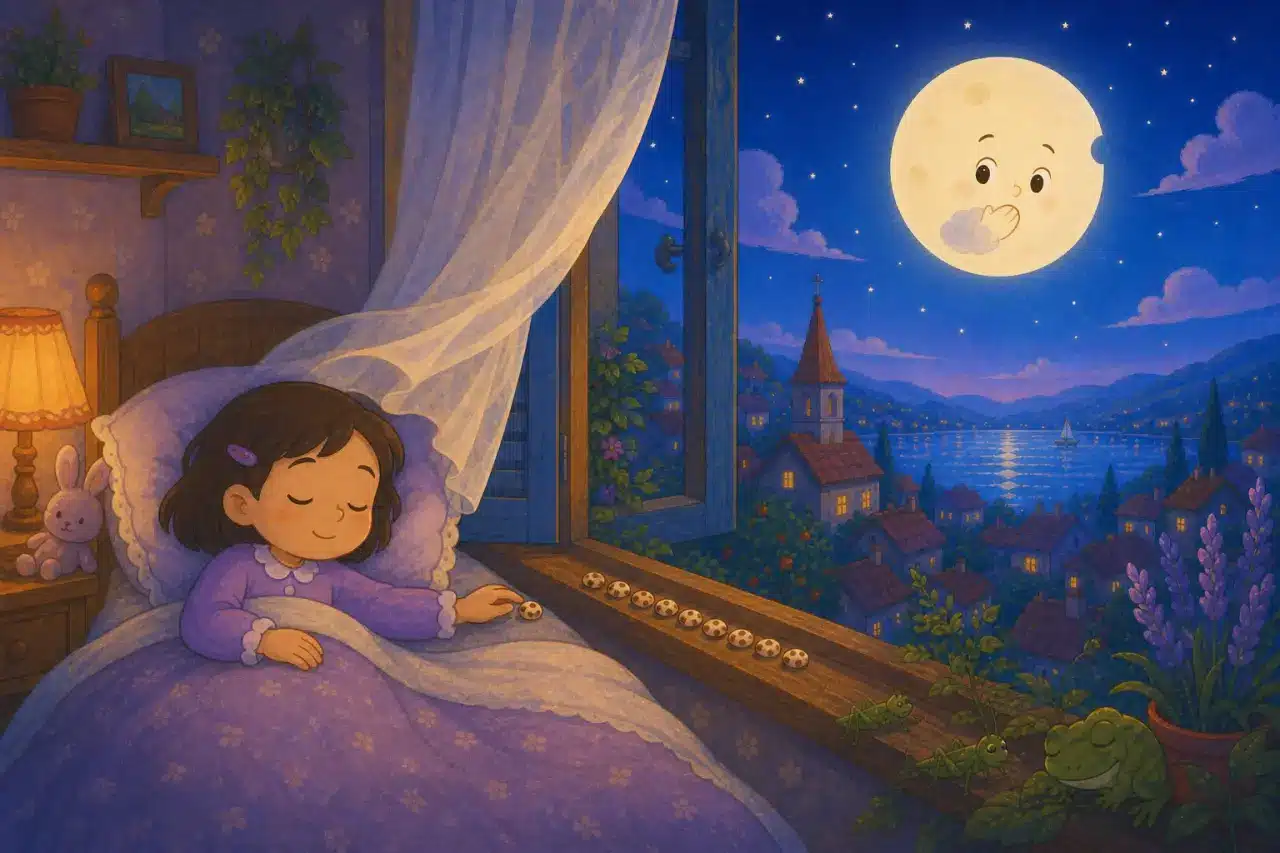
In the little village of Lakehill, perched high above a silver-blue lake, summer nights were warm and peaceful. Children slept with their windows open, crickets chirped beneath the berry bushes, frogs sang beside the water, and white curtains fluttered gently in the breeze.
Jessica, the smallest child in the village, was the first to notice that something was wrong. "Look at the Moon!" she cried.
One by one, lights appeared in the windows. Sleepy faces peeped out from behind flowerpots and curtains. "What is it?" called Jack, the oldest of the children. "Last night the Moon was perfectly round," said Jessica. "But tonight a piece is missing!"
She was right. A small, bite-shaped piece had vanished from the Moon’s bright edge.
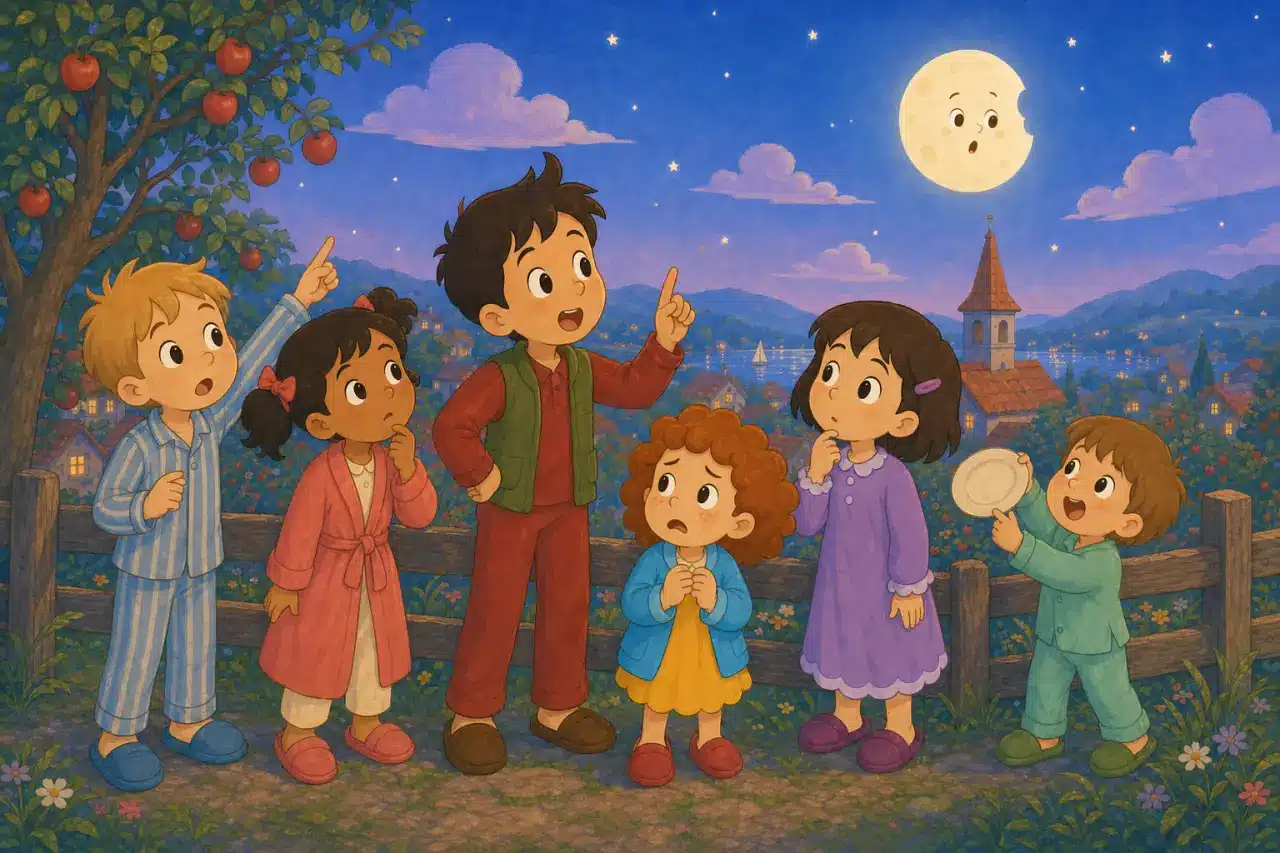
The next evening, the children gathered on the old fence beside the orchard and discussed every possible explanation. "Perhaps a cloud ate it," said Thomas. "Perhaps it caught on the church steeple," said Lucy. "Perhaps someone in the next village cut off a slice for supper," said little Ben.
At last, Jack raised one finger. "The Moon has the hiccups," he announced. Everyone fell silent. It was the only sensible theory. "Every time the Moon goes ‘HIC!’ a piece breaks off. If we do not cure it, there will be nothing left by the end of the week."
The children looked up. The Moon seemed smaller already. "We must frighten the hiccups away," Jessica whispered.
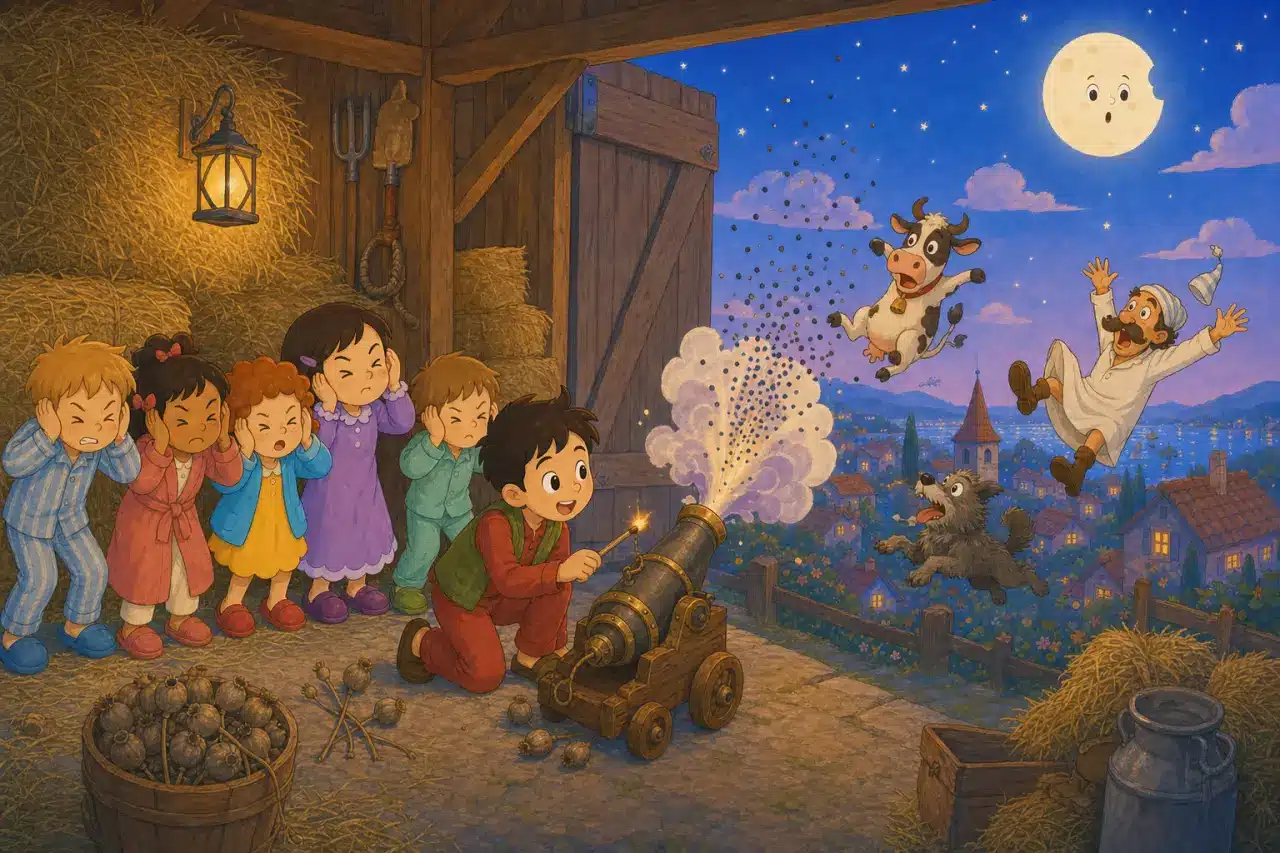
They crept into Grandpa’s hay barn, where an ancient cannon had been gathering dust for as long as anyone could remember. They rolled it to the open door and loaded it, not with cannonballs, but with dry poppy heads from Grandma’s garden.
Jack lit the fuse. Fssssssss… "Ready?" he whispered. The children covered their ears. BOOM! Poppy seeds flew over the rooftops like black rain.
The cows jumped. The dog jumped. The mayor jumped straight out of bed and landed in his slippers. Every baby in Lakehill began to cry, every rooster began to crow, and Grandpa shouted, "Who has been touching my cannon?" But the Moon did not even blink.
In the morning, the Moon was even smaller. "We cannot frighten it," said Jack. "We must give it something to drink. Everyone knows that water cures hiccups."
The children found the largest bucket in the village and carried it to the top of the hill. They filled it with fresh water from the well and placed it carefully beneath the Moon.
"A little to the left," said Lucy. "A little to the right," said Thomas. "Stop!" cried Jessica. "There it is!" The Moon floated perfectly in the bucket, pale and bright, trembling whenever the children breathed. "Drink up," they told it.
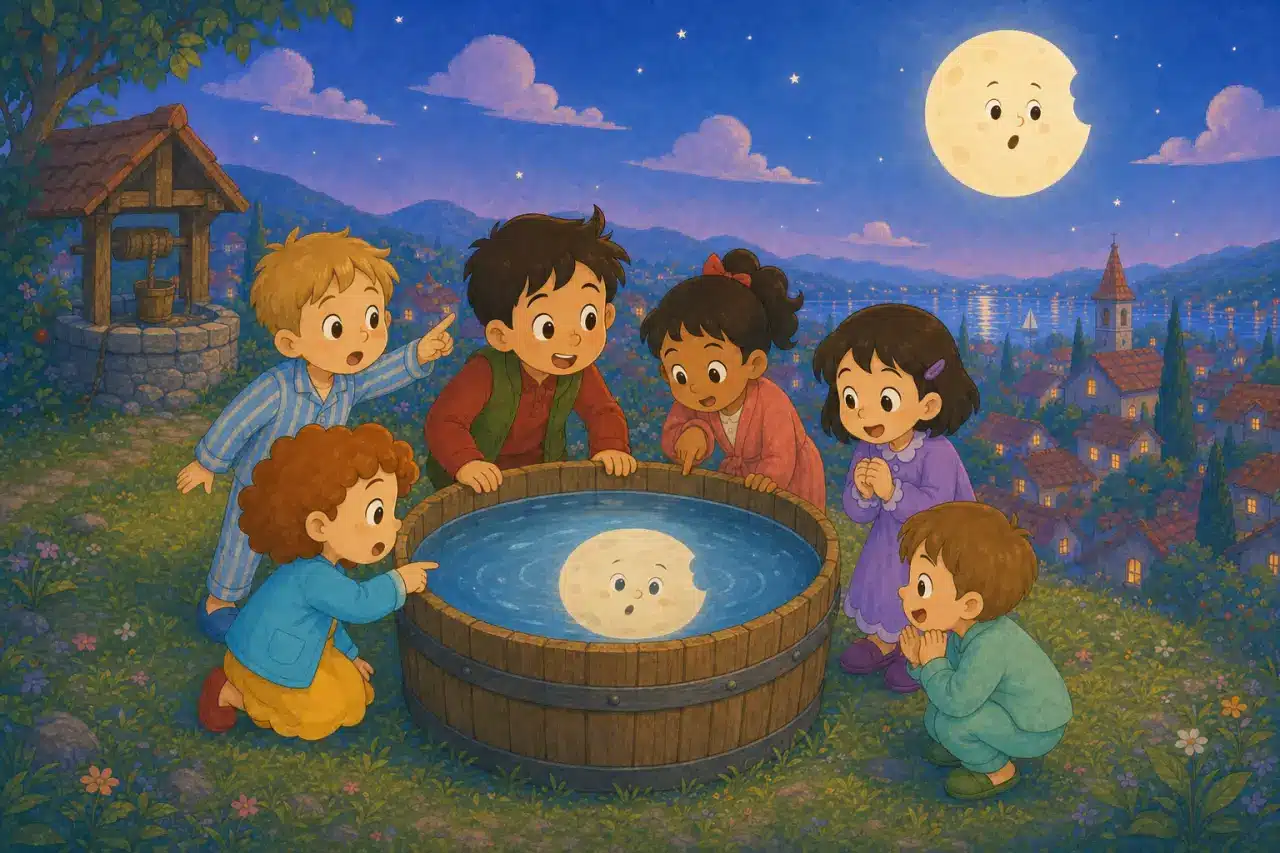
They waited. Ten o’clock passed, then eleven. At midnight, the water began to disappear. "It is drinking!" whispered Ben. The children watched excitedly as the water sank lower and lower.
Then something warm and enormous nudged them aside. It was Farmer Brown’s old horse. He put one hoof into the bucket and drank nearly all the water himself. The Moon’s reflection wobbled between his muddy legs.

In the morning, the Moon was even smaller.
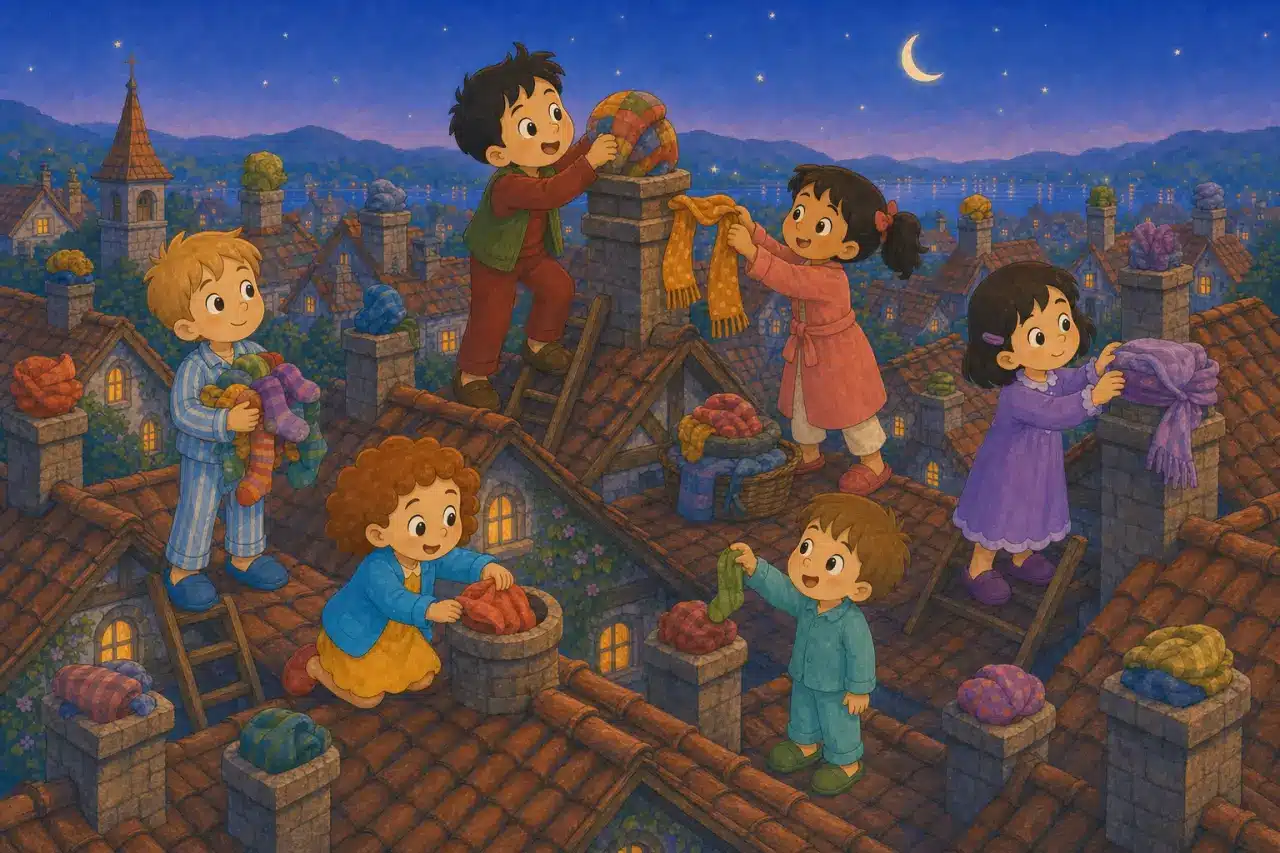
By then, only a thin silver curve remained. "We must stop it from breathing," Jack decided. "If there is no air, it cannot hiccup." "But how can we stop the air?" asked Jessica. "By stopping the wind." Jack thought very hard. "We plug every chimney in the village."

That night, the children stuffed the chimneys with old scarves, torn blankets, woollen socks and every rag they could find. For a while, Lakehill was completely still. Not a single puff of smoke escaped into the sky.
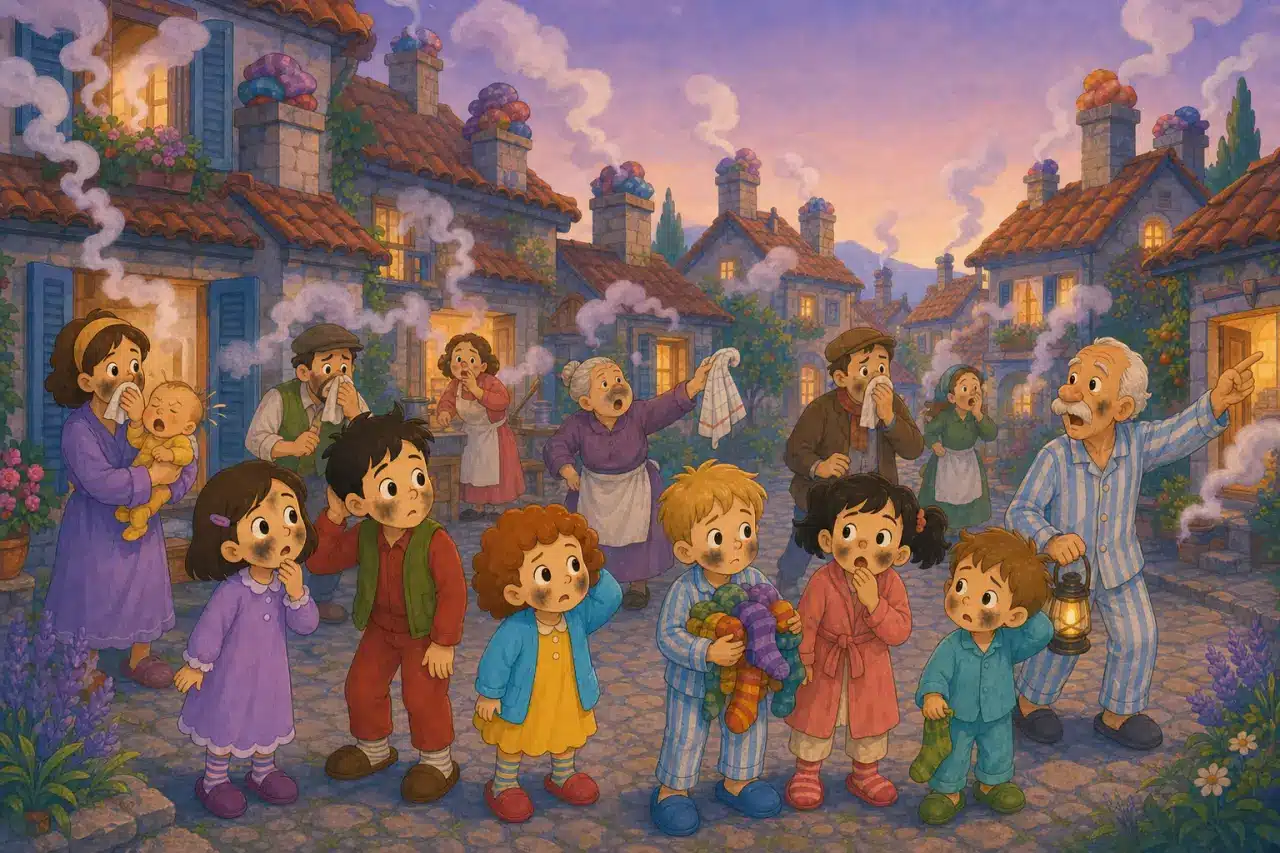
Then the smoke began creeping back into the houses. It rolled under doors, curled beneath beds and filled every kitchen. Fathers coughed. Babies sneezed. Grandmothers waved towels. Mothers rushed outside with black smudges on their noses.
By sunrise, the whole village smelled like a burned cabbage pie. The mothers were furious, the fathers were confused, and Grandpa was still asking about his cannon.
The Moon was nowhere to be seen. It had disappeared completely.
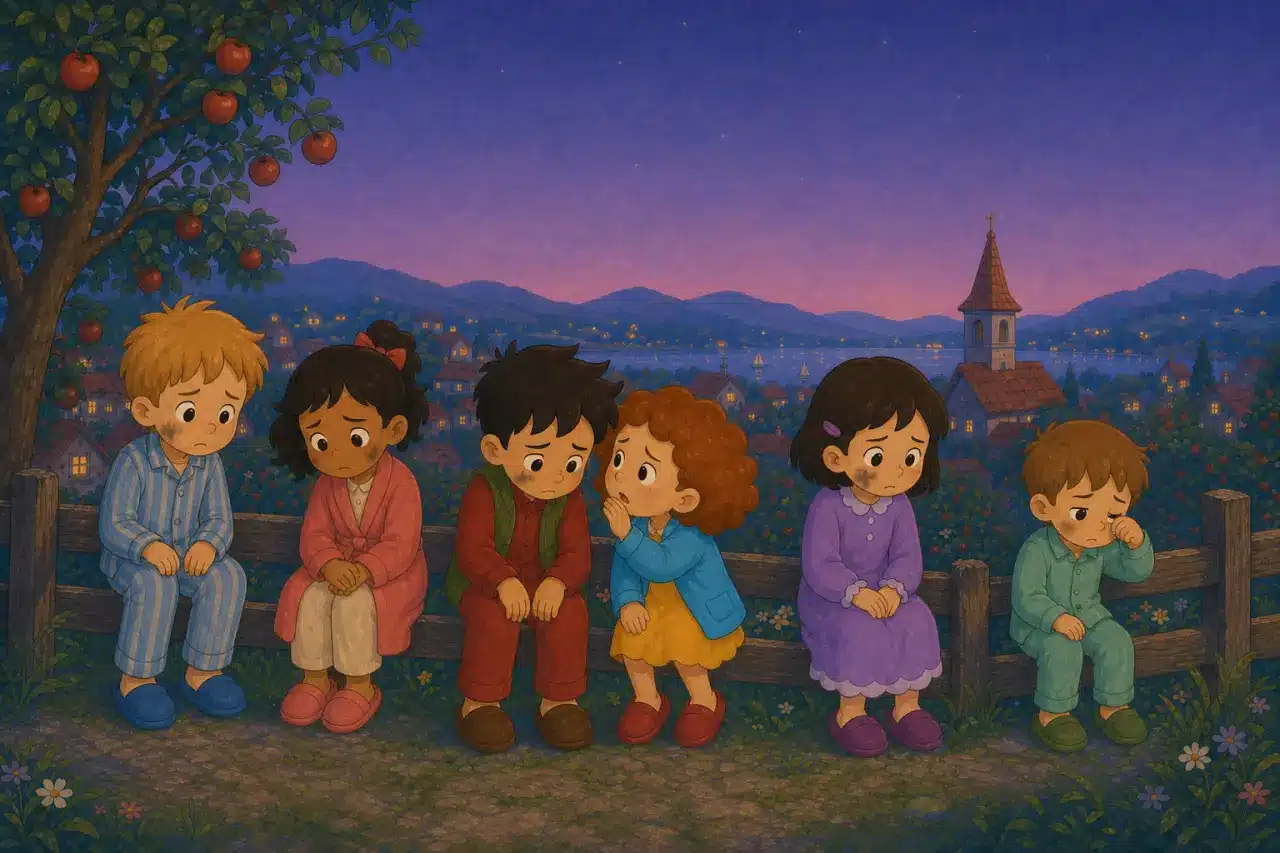
The children sat on the old fence without saying a word. "We made everything worse," whispered Jessica. "No more Moon," Ben sniffled. "No more moonlight on the lake. No more silver rooftops. No more shadows dancing on the walls."
They went home one by one, too sad even to say goodnight. Only Mary remained in the yard. She did not shout, fire a cannon, carry water up the hill or stuff anything into a chimney. She simply sat beneath her open window, folded her hands and looked at the empty sky.
Then Mary began telling the most boring story she knew. "Once upon a time," she said softly, "Grandma decided to count her beans."
"She counted one bean. Then she counted a second bean. Then she counted a third bean…" Mary went on and on. The crickets stopped to listen, the frogs grew quiet, and even the leaves seemed to become sleepy.

"Forty-eight beans," Mary murmured. "Forty-nine beans. Fifty beans…"
High above the village, something pale peeped from behind the hill. "Eighty-three beans. Eighty-four beans. Eighty-five beans…" A silver curve rose slowly into the sky. "Ninety-nine beans. One hundred beans. One hundred and one beans…" The silver curve grew wider and rounder.
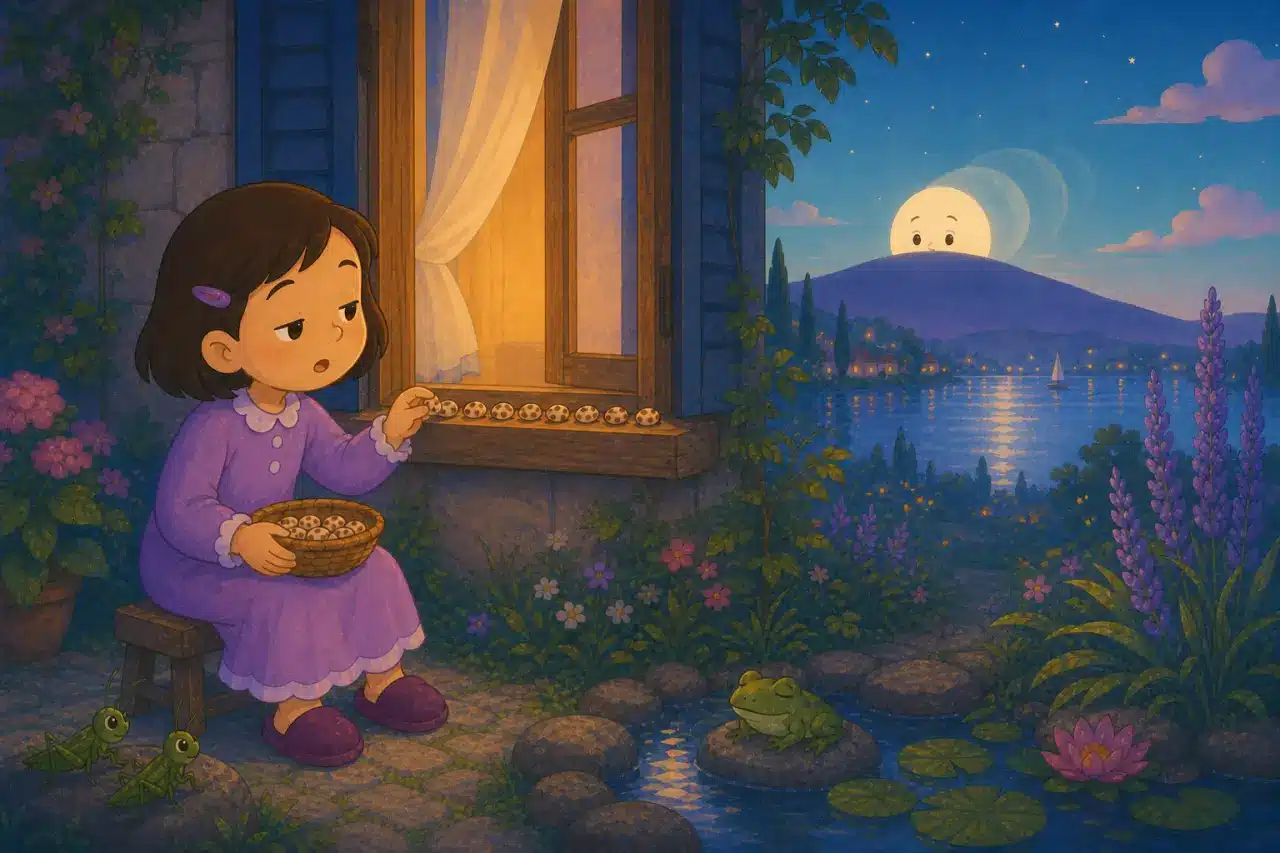
At the one hundred and seventeenth bean, a perfectly round and terribly sleepy Moon lifted itself above the hill. It yawned. It blinked. Then it gave one soft little snore.
Mary smiled. She reached through her open window, pulled down the white curtain and tossed it high into the night. The breeze caught it and spread it across the Moon like a blanket. "Goodnight," she whispered. Then she climbed into bed and fell asleep.

From that night on, everyone in Lakehill remembered this: you cannot shout hiccups away, and you cannot frighten them away. Hiccups leave only when you forget all about them.
And the Moon? It still hiccups sometimes, even today. People say it happens whenever Mary forgets to finish her story.
What will you read next?
The Little Moon Who Didn’t Want to Sleep
A little moon tumbles from the sky before bedtime. Come and meet the forest friends he finds below.

Ollie Owl and the Missing Moon Misadventure
An owl cannot find the Moon. Join a wolf and a firefly on a rather muddled nighttime search.
Commentary