
Once upon a time, long ago, there lived a poor farmer. He had a small piece of land which he plowed and sowed before nightfall, and then went to the forest to graze his two oxen.
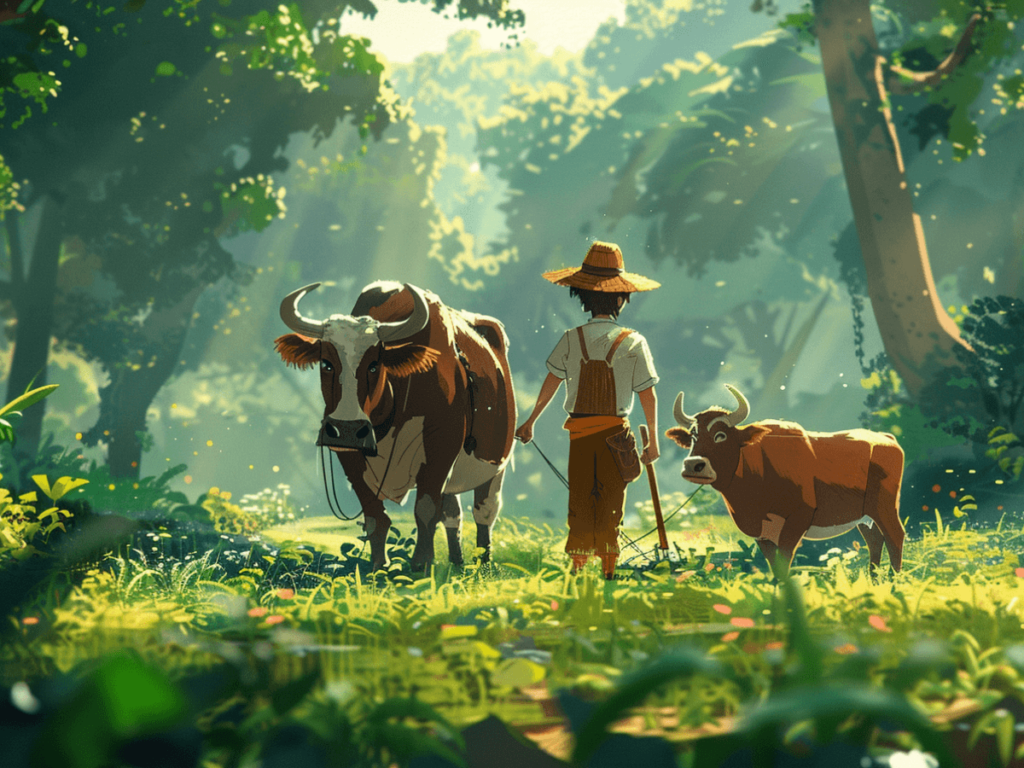
As he grazed the oxen, he pondered his misfortune: “What will you do now, poor man? You’ve sown the last of your grain, what will you and your wife and children eat in winter? Should we sell these oxen? But then what will we plow and sow with in spring?”
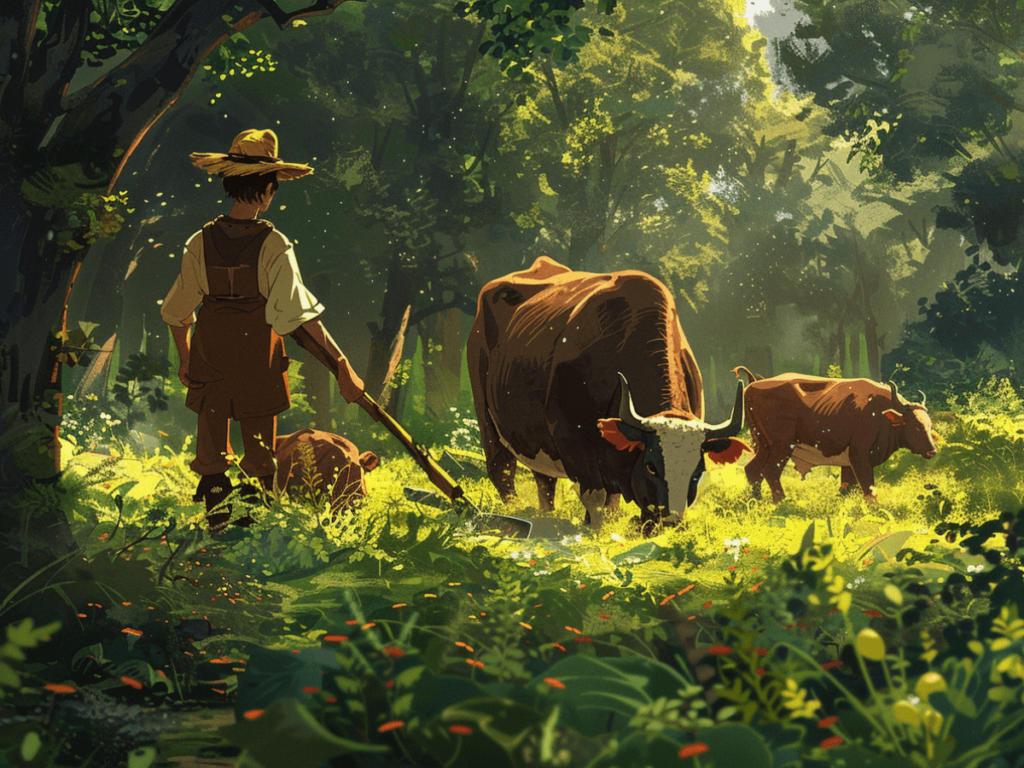
As he was thinking, an old raven cawed above him: caw-caw! “What kind of guest is this?” the farmer looked up.
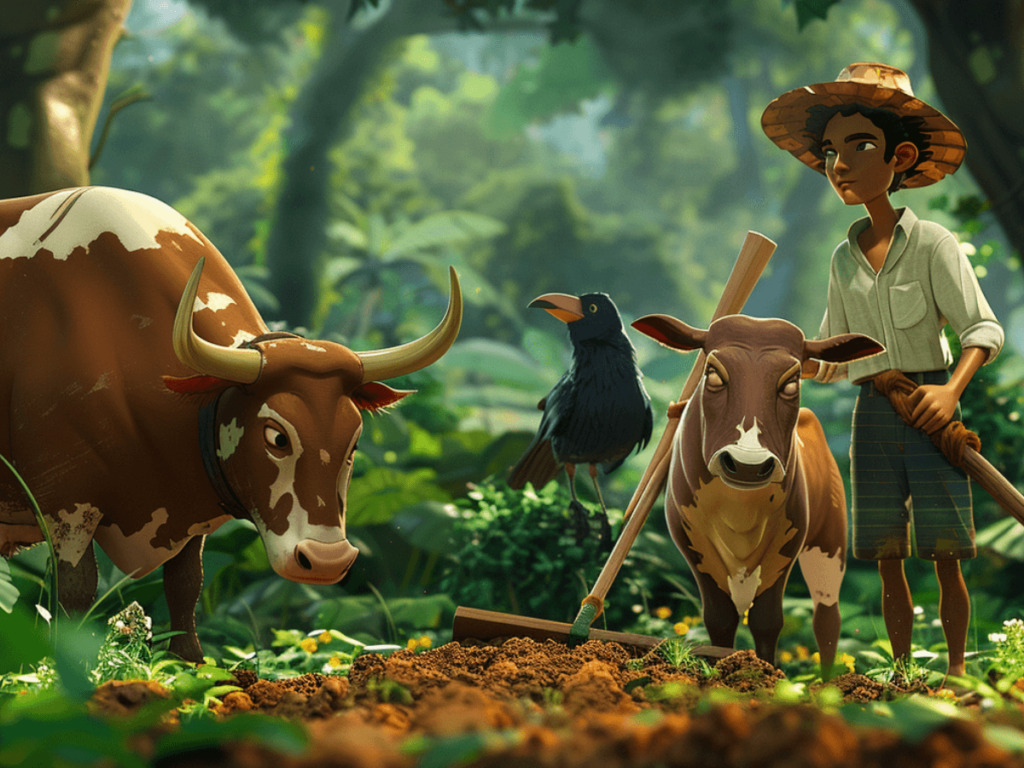
“A guest indeed,” said the raven. “Your oxen look tired. Let me take them to a meadow where the grass is sweeter, and I will reward you for trusting me.” The farmer stared in disbelief. “How could a raven lead two oxen?” he asked.
“They will be safe,” promised the raven. “Follow me to my castle, and I will show you.” The farmer was uncertain, but he agreed.
The raven circled the oxen, and a gentle swirl of leaves carried both animals out of sight. The farmer gasped. “Where have they gone?” “To a fine pasture,” said the raven. “Follow me, and I will keep my promise.”
“My wife will want to know where our oxen are,” said the farmer. He decided to follow the raven and bring back good news.
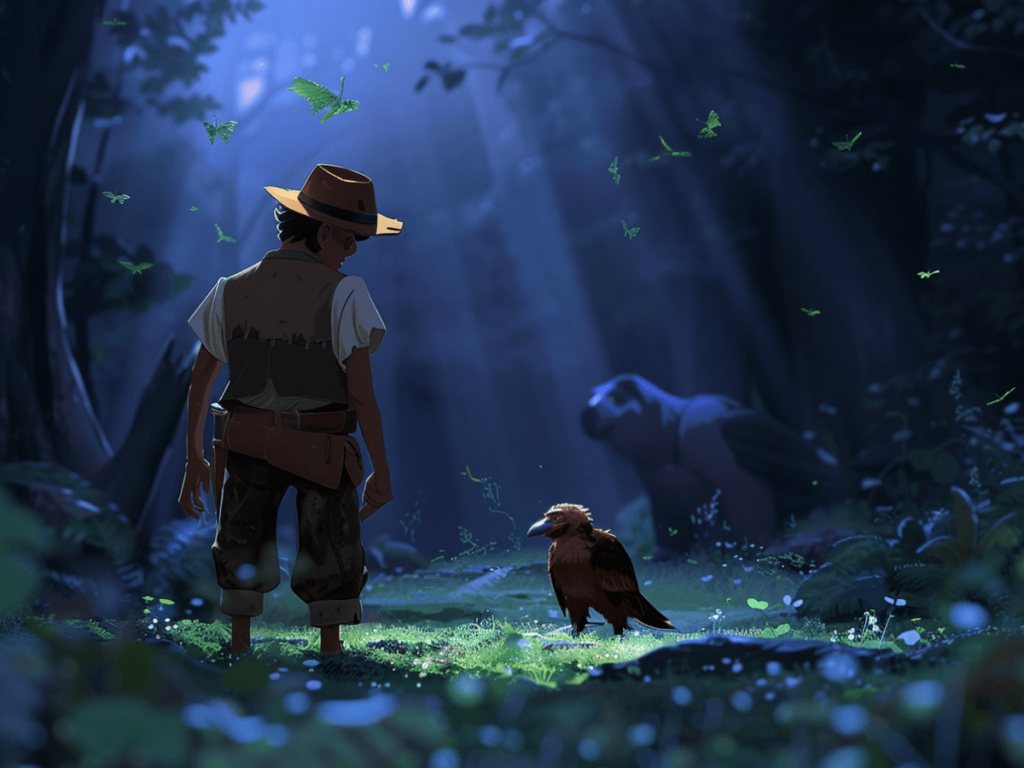
The raven told him how to find its distant castle. “I will bend the treetops along my route so you can follow the path. The walk will take three days, but at the end you will find your oxen safe and receive a reward.” With that, the raven flew away.
The farmer returned home and explained what had happened. His wife was worried, but she packed ash cakes for his journey and encouraged him to bring the oxen home. Before dawn, he set out along the raven’s trail.
The poor farmer walked and walked, as long as there were marks on the treetops and ash cakes in his bag. But on the third day towards evening, there was nothing left in his pocket, and even if the treetops had been broken, he couldn’t see them in the dark. He had wandered far and was exhausted. Suddenly, as if something had dawned on him.
He found himself in a large green meadow, and around him, like a new world – three golden walls gleamed. There were no creatures around. Only in the middle of the meadow stood a shepherd with a staff, a man as tall as a pine tree. “Come boldly here, man; what do you want?” called out the shepherd. “Oh, my dear shepherd, well, what do I want here when I don’t even know where I am?
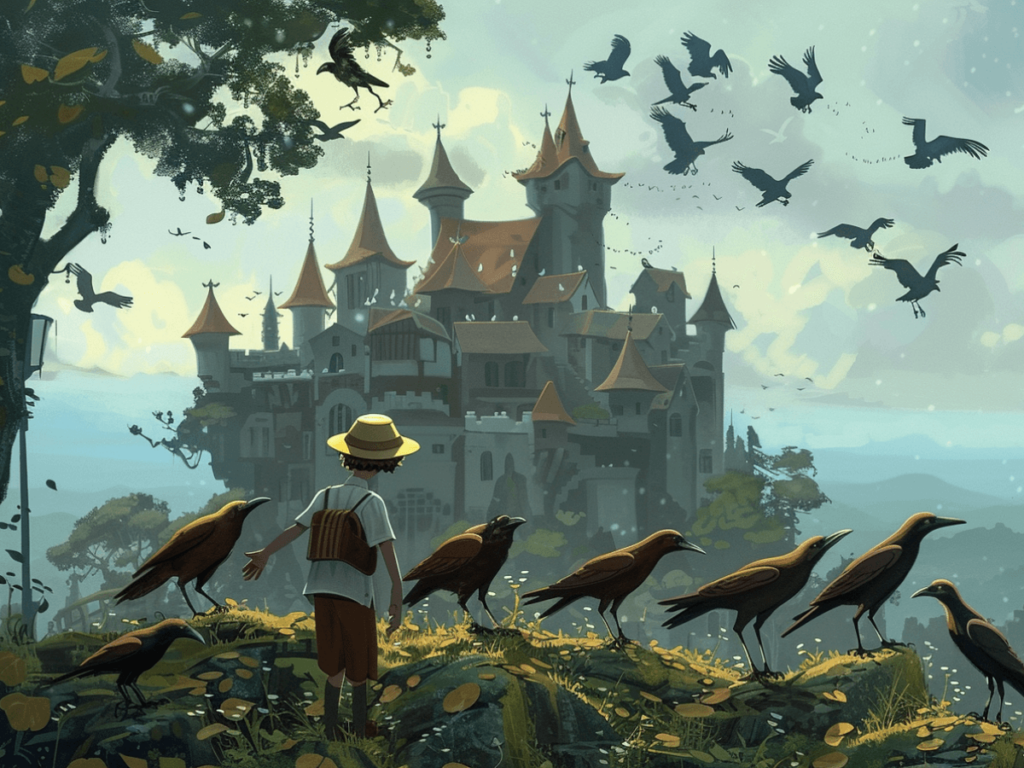
But at least tell me, who lives there in those shiny castles?” “Well, my flocks, my ravens live there.” “Well, that’s it, look, that’s who I’m looking for!” the man rejoiced when he heard about the ravens. And he told the shepherd the whole story.
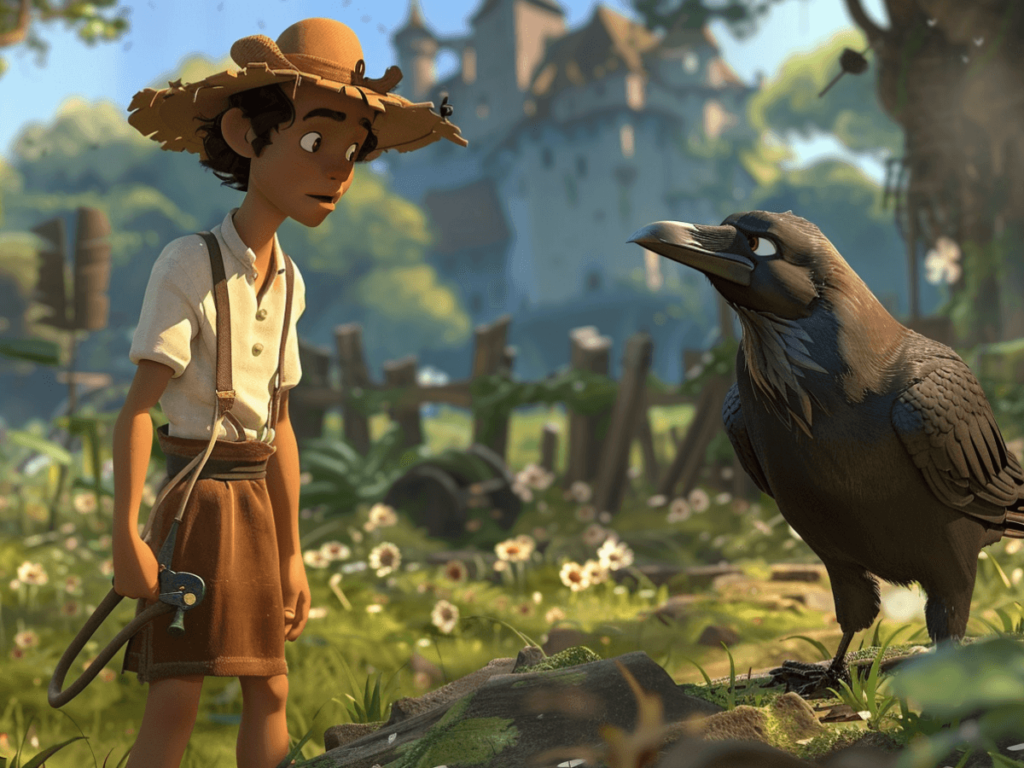
The shepherd asked, “Would you recognize the raven?” “Certainly,” said the farmer. “It limps on one leg and has more gray feathers than black. I watched it make my oxen vanish in a swirl of leaves.”
“We’ll soon find out if you recognize him,” said the shepherd and whistled on his thumb, so that the mountains echoed.
The first flock of ravens flew in and occupied one castle; but the farmer didn’t recognize any of them. The shepherd whistled a second time; the mountains echoed. The second flock of ravens flew in and occupied the second castle; but the farmer again didn’t recognize any of them. The shepherd whistled a third time, the mountains roared, ravens flew in from all corners of the world and occupied the third castle; but the farmer couldn’t recognize any of them even now.
The shepherd asked whether all the ravens had arrived. “All but the old limper,” they answered. “Then wait for him,” said the shepherd. “He will lead you to his castle. You may be offered gold and silver, but ask instead for the little grinder on the table. Its gift is worth more, if you know the words:”
‘Little grinder, turn around; table, stretch out; tablecloth, spread yourself: give what you have to eat and drink!'”
At that moment, the old limping raven was flying in from the direction of the mountains. “Where have you been, servant?” the shepherd asks him. “My lord, I was looking for this man in the forest so he wouldn’t get lost in the night,” said the limper.
“You are the one who borrowed this farmer’s oxen,” said the shepherd. “Show him that they are safe, and give him the reward you promised.”
As the shepherd commanded, he just waved his staff once, and immediately the ravens dispersed each to their own, and the old limper led the man to that third castle.
The old raven offered the farmer glittering gold, but he asked for the small grinder on the table. The raven explained that both oxen had already returned safely to their pasture at home. Then he gave the farmer the grinder as thanks for his trust and taught him how to use it. The farmer tucked it into his bag and started home.
With that, he left, because it was already dawning. But they say it’s lonely on the road without bread. He felt hungry too.
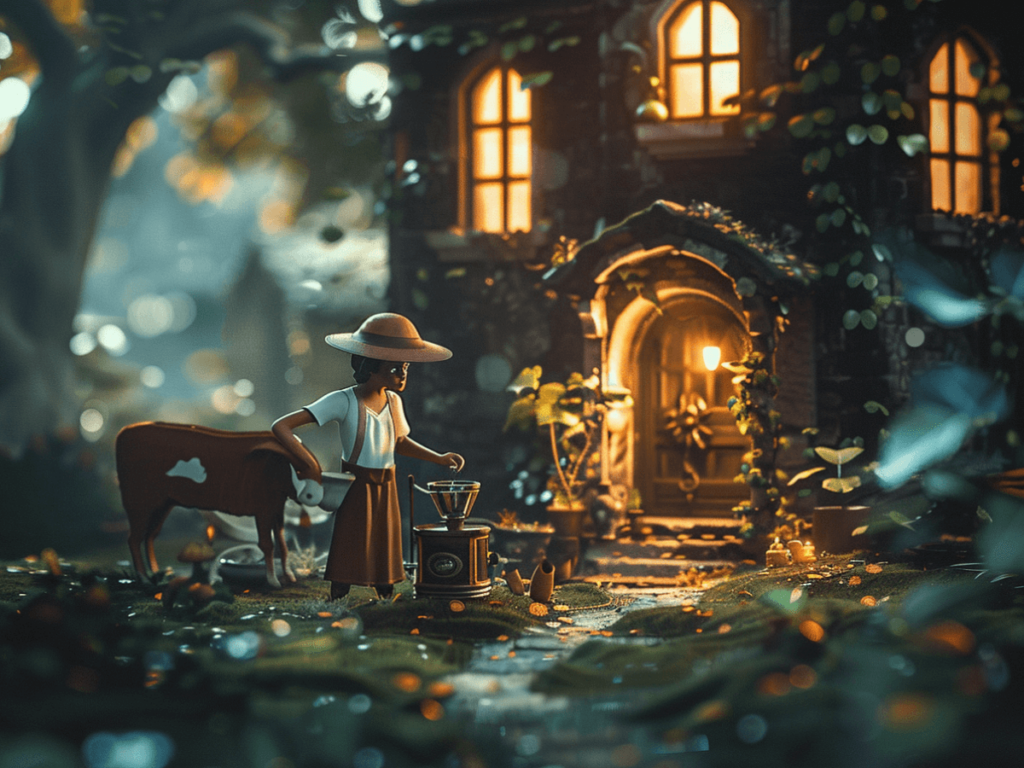
“Well,” he says, “bread is indeed a good companion; I’ll try what this grinder can do.” He takes it out of his pocket and commands:
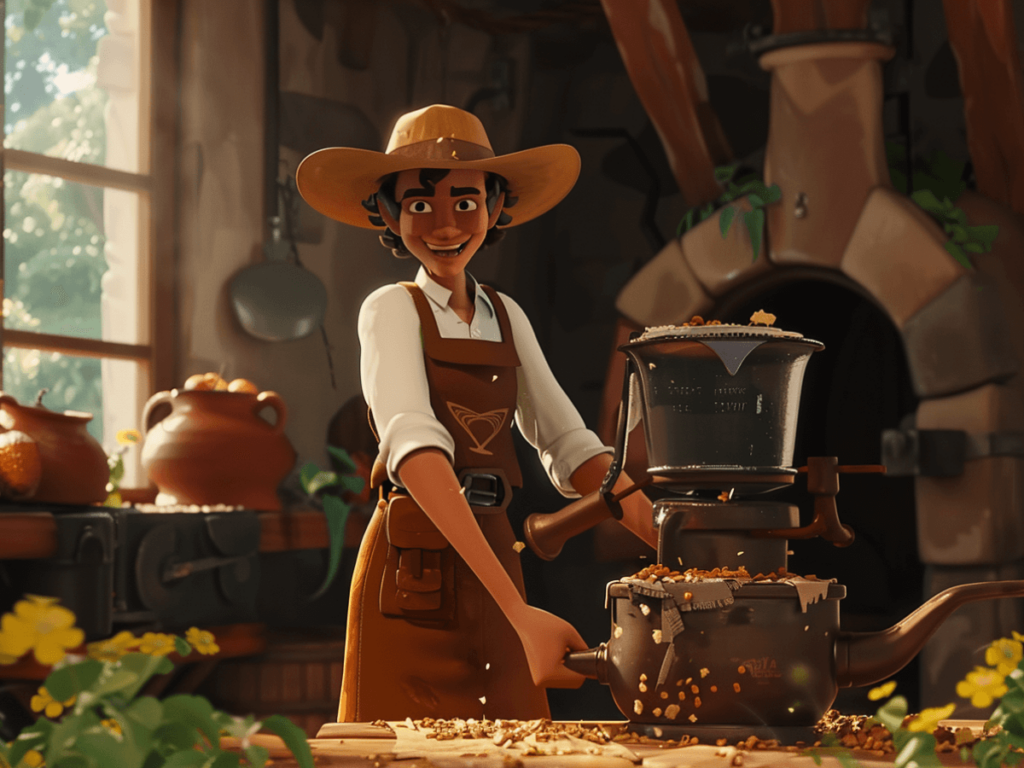
“Little grinder, turn around; table, stretch out; tablecloth, spread yourself: give what you have to eat and drink!”
As if it had grown out of that little grinder, a table stretched out, a tablecloth spread on it, and on that were foods and drinks: cakes, roasts, fruits, wine, and who knows what else! Oh, he heartily dug in! Although there was a lot, it still disappeared from that tablecloth as if it had been swept away.
A shepherd nearby had watched the feast appear. The farmer invited him to eat, and they shared the food happily. When the table folded away again, the shepherd showed him a walking stick that could guide its owner toward whatever had been misplaced.

“Would you trade your grinder for my stick?” asked the shepherd. The farmer, curious about its magic, agreed, and they parted.
Before long, the farmer missed the grinder’s generous table. He asked the stick to guide him back. When he found the shepherd, he explained that his family needed the grinder more than he needed a guide. The shepherd gladly returned it and let him keep the stick as thanks for the meal.
Farther along the path, the farmer met a hungry soldier returning home. He invited the soldier to sit and share a feast from the grinder.
The soldier was amazed. In return for the meal, he showed the farmer a silver whistle that called friendly birds to help find a safe path. For a moment the farmer traded away the grinder, eager to try another wonder.
Then he remembered his family waiting for food. He followed the birds, caught up with the soldier, and asked to undo the trade.
The soldier understood. He returned the grinder and gave the farmer the whistle as a gift. “You fed me when I needed it,” he said. The farmer thanked him and continued home.
Next he met a traveler wearing a three-cornered hat. The farmer shared another meal, and the traveler showed him that the hat could summon three strong gusts of wind. They briefly traded, but when the farmer explained that his family depended on the grinder, the traveler returned it. In gratitude for the feast, he let the farmer keep the hat too.
At the edge of the forest, a wandering woman asked for a little food. The farmer welcomed her to the table. She showed him a white handkerchief that could calm worried hearts and clear away a troublesome spell. She offered to trade it for the grinder, and he agreed before thinking it through.
The farmer soon realized how much the grinder meant to his family. He found the woman again and asked honestly to exchange their gifts back. She returned the grinder and gave him the handkerchief anyway, grateful for his kindness.
Now the farmer carried the grinder, the walking stick, the whistle, the hat, and the handkerchief. He had learned that a generous meal and an honest word could bring more good fortune than clever bargains. He hurried home, eager to share everything with his family.
His wife was startled to see an old grinder instead of a bag of coins. The farmer smiled and asked her to set the table. When he spoke the magic words, a wonderful meal appeared, and her worries gave way to delight.
“Little grinder, turn around; table, stretch out; tablecloth, spread yourself: give what you have to eat and drink!” –
everything was immediately good: everyone ate and drank their fill. The wife caressed her husband, saying that it would indeed be good to feed like this, the children were hopping around the room, saying they had never eaten so much, right up to their throats.
“Oh, but you know what, my dear husband?” the caring wife began after a while. “With that lord from the manor, where we left our cart as collateral, I had a whole cross to bear at home! He sends me a message every day, asking what he’ll do with an old cart, that we should just return his flour. I know that the grinder can easily grind that measure of flour; but it would be good to appease that grumbling lord with something. It wouldn’t cost us much if we added a roasted turkey and a hare from this grinder to that measure of flour. I would take it all to him right away.”
“Well, you’re saying something,” said the husband, “that’s how we’ll appease him best; you just take it to him.”
The wife carried flour and a splendid meal to the manor, hoping to thank the lord for lending them supplies. But the lord accused her of taking food from his stores. He would not hear her explanation and insisted she wait in a room at the manor while he summoned her husband.
A bailiff arrived at the farmer’s house with the lord’s order. The farmer asked him to listen, but the bailiff would not.
“My wife brought a gift, not stolen goods,” the farmer said. He blew the silver whistle, and friendly birds carried the message through the village. Neighbors came to the manor as witnesses to the farmer’s honesty.
The lord sent two officials to bring the farmer in alone. They returned with news that the farmer and the neighbors were on their way together, asking only that the woman be released and heard fairly.
Angry at being questioned, the lord ordered the manor gates shut. The farmer stopped outside, unwilling to leave without his wife.
He turned his three-cornered hat, and a lively gust of wind swung the gates open and sent loose papers fluttering through the courtyard. No one was hurt. The villagers entered and calmly asked the lord to listen.
“Why keep my wife here when she came with a gift?” asked the farmer. The lord, surprised by the crowd and the magic, finally agreed to hear their story.
The farmer explained that the grinder made food enough to share. The lord released his wife, and the farmer invited everyone, including the lord and his household, to a meal so they could see the truth for themselves.
The farmer waved the white handkerchief to soothe the worry that had filled the courtyard. Then he and his wife led their guests home.
The lord offered to return the farmer’s cart loaded with supplies, but the farmer said they could settle the old flour debt fairly after lunch. Curious, the lord came with his household and sat at their table.
They could hardly believe their eyes when the farmer just set out the grinder and commanded it to grind, and immediately the table stretched out, the tablecloth spread, and everyone could choose whatever foods and drinks they desired. It was a feast of feasts!
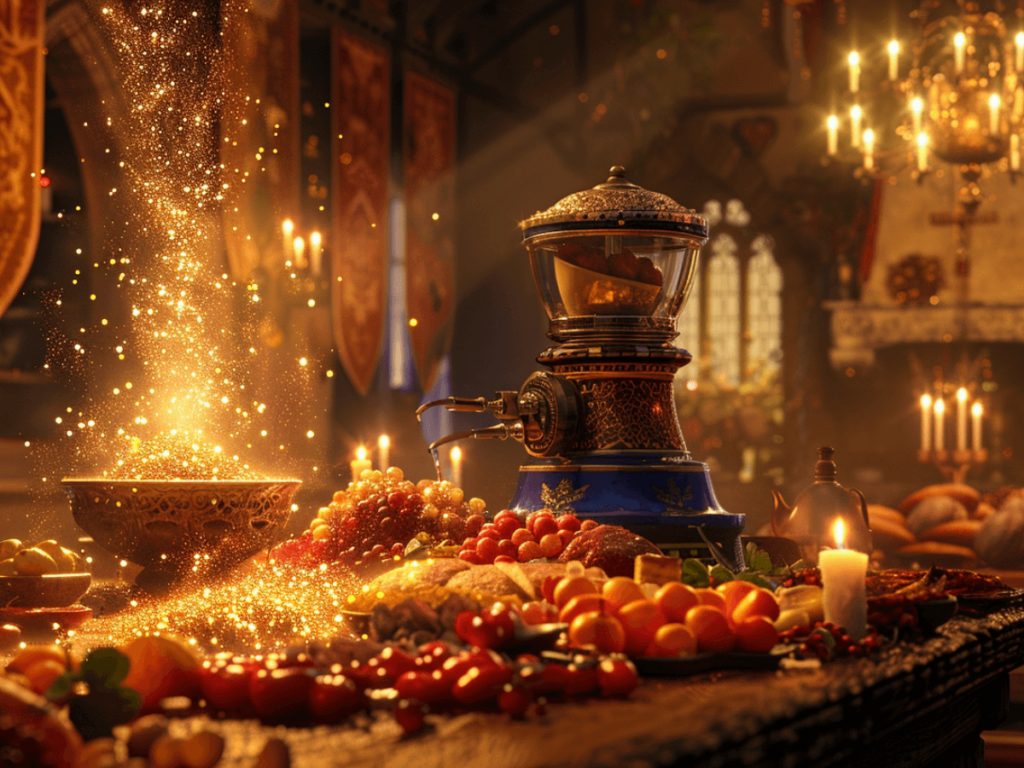
After the feast, the lord wished the grinder were his. He pretended he needed the walking stick and silver whistle to guide his workers along the roads, and the trusting farmer lent them to him.
With the stick and whistle in hand, the lord returned with his guards and demanded the grinder. He threatened to take the farmer’s belongings if he refused.
“Is that truly what you mean to do?” asked the farmer.
“Yes,” replied the lord.
The farmer turned the first corner of his hat, and a gust lifted the guards’ hats into the air. He turned the second corner, and the lord’s papers swirled around the courtyard. At the third turn, a shower of leaves and blossoms settled over everyone. The guards laughed, and the lord saw that force would not win him the grinder.
The lord apologized and returned the stick and whistle. The farmer asked him to release every unfair debt and treat the villagers with respect. The lord agreed.
The farmer waved the handkerchief once more, clearing the last of the worry from the courtyard. Then he invited the lord, the guards, and the villagers to sit together at a long table. He spoke the familiar words:

“Little grinder, turn around; table, stretch out; tablecloth, spread yourself: give what you have to eat and drink!” And only now was there a feast above all feasts!
From then on, the farmer used the grinder to make sure no family in the village went hungry. The lord kept his promise, and everyone who helped with the work was treated fairly. The little grinder’s fame spread far and wide.
And whenever a guest arrived hungry, there was always room for one more at the table.
A gentle retelling inspired by a Slovak folktale collected by Pavol Dobšinský.


The Little Magic Grinder